

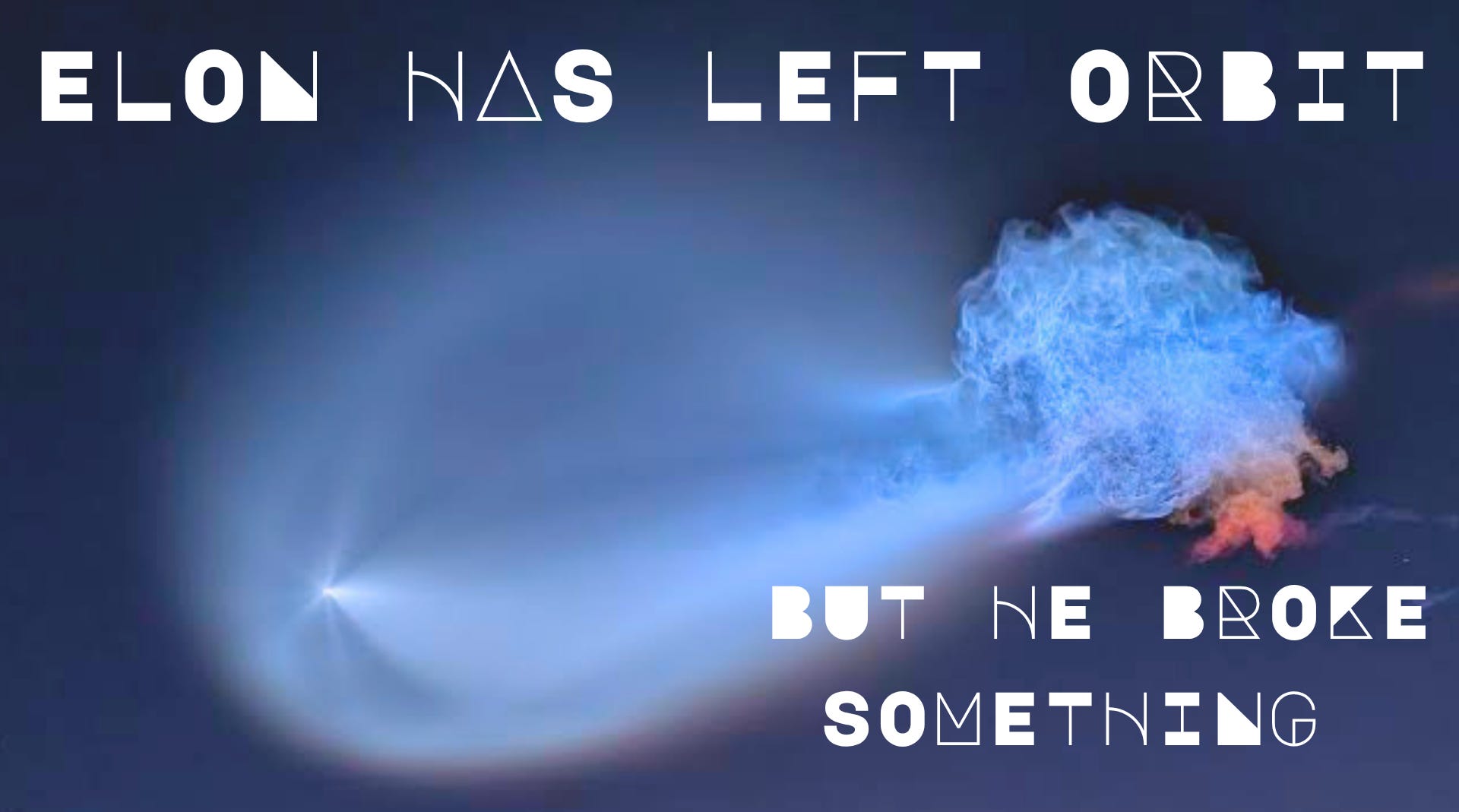
Elon Musk just went full sci-fi villain on our night sky. If you looked outside recently and thought the simulation was glitching, or that a rogue cosmic deity was opening an interdimensional portal right over your suburban neighborhood, you aren’t alone. The internet completely lost its collective mind with viral conspiracy videos claiming that SpaceX finally breached the literal "firmament"—you know, that giant invisible dome the ancient texts warned us about. Honestly, with the way things are going in 2026, nobody would have been surprised if a massive tear in the universe’s fabric just started dripping glowing blue space-squids into our atmosphere. Luckily for our collective existential anxiety, Elon didn't accidentally initiate a localized Big Bang or summon an alien armada. Instead, a routine rocket launch managed to paint a breathtaking, swirling, fluorescent "artificial nebula" hundreds of miles wide right across the dark sky, turning the upper atmosphere into a personal neon canvas.

Once the internet stopped screaming about the end of days and put down the apocalypse bingo cards, the real truth rolled in. This reality-bending spectacle wasn’t a glitch in the Matrix; it was a textbook manifestation of what aerospace experts call the "twilight phenomenon," or more affectionately, the "space jellyfish" effect. The breathtaking event occurred during a recent early morning SpaceX Falcon 9 launch from Florida. While ground-level observers were still cloaked in total pre-dawn darkness, the rocket rapidly climbed fifty miles high, clearing Earth’s physical shadow. Up there, high above our heads, the sun’s early rays struck the rocket’s expanding exhaust cloud perfectly. Because the ambient sky at that altitude is effectively an inky vacuum, the frozen ice crystals and gasses from the engine bloomed outward without atmospheric resistance, catching the sunbeams like a massive celestial prism and casting an eerie, iridescent blue, silver, and orange glow across several states.
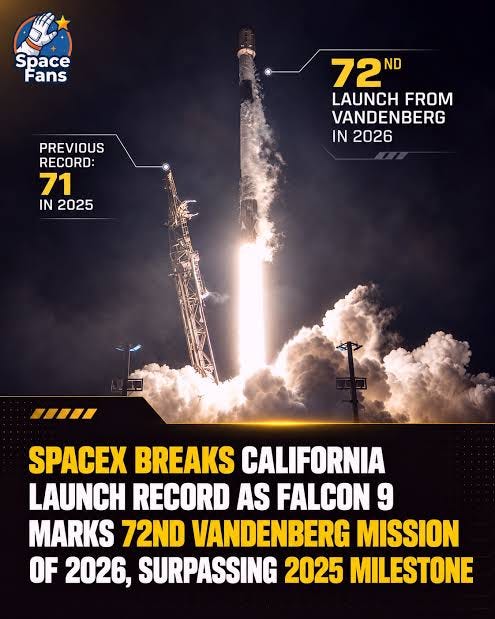
The vehicle responsible for turning the atmosphere into a cosmic art gallery is none other than the workhorse of modern spaceflight: the SpaceX Falcon 9. To the average onlooker standing on a beach or watching from their backyard, the rocket on the launchpad looks like an imposing, ultra-sleek, chalk-white obelisk standing roughly 230 feet tall. It is split into two main sections: a massive first-stage booster that handles the heavy lifting through the thickest parts of our air, and a smaller second stage nestled under a bulbous nose cone that houses the payload. When it streaks across the sky during a twilight launch, it transforms from a mechanical cylinder into a blazing point of light leading a monstrous, translucent, fan-shaped tail. The sheer scale is difficult to comprehend until you realize that this single machine weighs over 1.1 million pounds at liftoff, generating enough raw kinetic energy to punch through the outer edges of the globe at speeds exceeding 17,500 miles per hour—making any rumors of it "bouncing off an invisible ceiling" a physical impossibility that would otherwise instantly obliterate the vehicle.
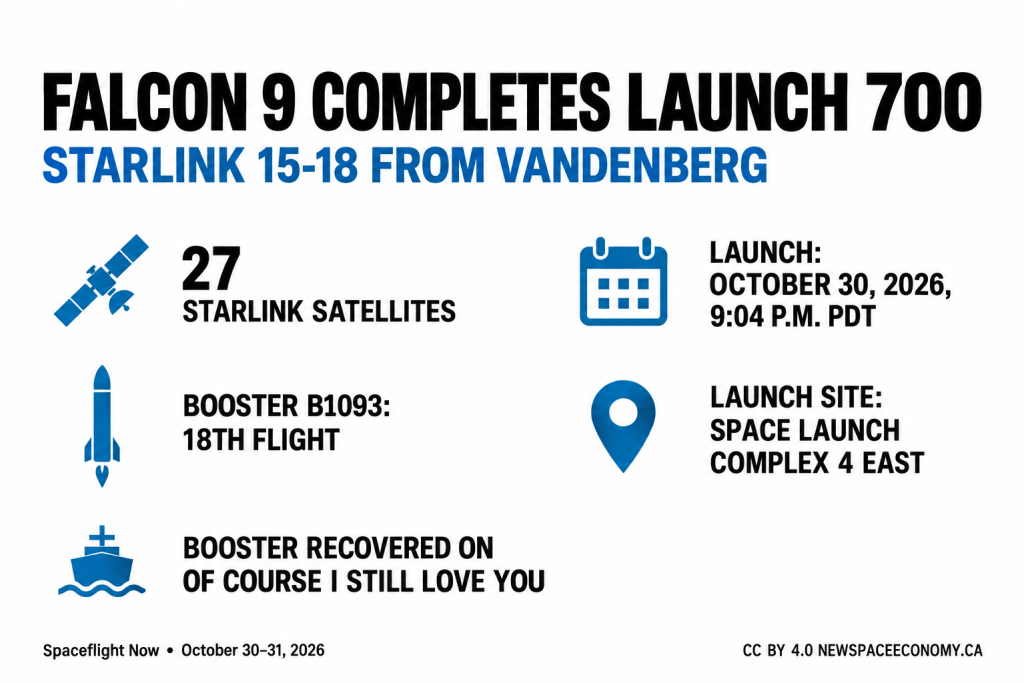
An engineering marvel of this magnitude doesn't just happen in a vacuum—pun fully intended—and a massive shoutout is owed to the global giants that made this sky-splitting mission possible. This particular launch was part of a critical commercial resupply and satellite deployment initiative, executed in deep coordination with NASA, whose launch facilities at the Cape Canaveral Space Force Station in Florida provided the historic infrastructure required for liftoff. Furthermore, engineering credits belong to the industrial partners supplying the ultra-high-grade carbon composites and specialized alloys, alongside the primary electronics providers like Northrop Grumman and L3Harris, who assist in crafting components rugged enough to survive the extreme vibrational stress of atmospheric departure. It is the culmination of minds across these monolithic organizations that allows a vehicle to safely dance on the border of outer space while creating an accidental masterpiece for the millions of onlookers watching from planet Earth.
To truly appreciate why the sky opened up into a glowing faux-supernova, we have to look beneath the sleek metal skin and dive deep into the fluid mechanics, thermodynamics, and chemical propulsion systems powering the Falcon 9. The foundation of this entire spectacle rests on the nine Merlin 1D engines clustered at the base of the first-stage booster. These powerplants operate on an open-cycle gas generator design, utilizing a highly refined, rocket-grade kerosene known as RP-1 as the fuel source, paired with sub-cooled Liquid Oxygen (LOX) serving as the oxidizer. When these two propellants are slammed together inside the combustion chamber under immense pressure, they erupt into an ultra-high-velocity exhaust stream. However, the exact shape of the "nebula" seen by onlookers is a direct byproduct of a physics concept called underexpansion.
When a rocket is low to the ground, the dense weight of Earth’s atmospheric pressure acts like a corset, tightly squeezing the fiery exhaust trail into a narrow, focused column. But as the Falcon 9 tears upward through the troposphere and crosses into the vacuum of the mesosphere and exosphere, ambient atmospheric pressure plummets to near zero. With no external air molecules left to compress or hold back the engine emissions, the high-pressure exhaust gasses instantly expand outward at supersonic speeds the moment they exit the rocket's nozzle. This creates a vast, billowing veil of vaporized carbon dioxide, carbon monoxide, and water molecules stretching for hundreds of miles.
The magical color palette of the artificial nebula is the final piece of the scientific puzzle. As the water vapor and combustion byproducts are violently expelled into the sub-zero vacuum of the upper atmosphere, they undergo instantaneous desublimation—meaning the gas freezes directly into a massive, sprawling cloud of microscopic ice crystals. When the sun, still hidden beneath the curve of the Earth's horizon, shines upward through this cloud, the ice particles act as microscopic mirrors. Short-wavelength blue and silver light scatters aggressively across the outer ragged rings of the plume, while the denser, unburnt carbon particles closer to the core of the engine track produce a lingering, deeper reddish-orange hue. Furthermore, during standard mission profiles, the first stage executes a specialized "boostback burn" to flip its orientation and head back toward the landing pad. The intersection of the active second-stage engine plume colliding with the newly deactivated, venting gas of the falling booster causes the vapor cloud to twist, ripple, and swirl, leaving humanity with an unforgettable optical illusion that proves reality is often far cooler than fiction.
HOW TO CAPTURE THE COSMIC GLITCH: AN ASTROPHOTOGRAPHY GUIDE TO THE SPACE JELLYFISH
BY GRIIIMGAMER
GRIIIM.COM / GRIIIM MAGAZINE
For the camera nerds and night-sky stalkers, capturing an artificial nebula isn't as simple as pointing your iPhone out the window and hoping for the best. To lock down that crisp, otherworldly glow without turning the image into a blurry, pixelated soup, you need to understand the optics of high-altitude light scattering. Because the space jellyfish expands across hundreds of miles of the upper atmosphere, a wide-angle lens—ideally between 14mm and 24mm—is mandatory to frame the entire sprawling canvas. Astrophotographers use fast apertures like f/1.8 or f/2.8 to flood the camera sensor with as much of that faint, scattered twilight luminance as possible. The real trick lies in balancing your shutter speed; go too long, and the rapid, supersonic expansion of the frozen water vapor will blur into a mushy cloud, but go too short, and you miss the deep, ghostly blue gradients. A sweet spot of 2 to 5 seconds at a moderate ISO allows the sensor to freeze the delicate, rippling shockwaves of the exhaust plume while preserving the pinpoint stars in the background.
Of course, you can't talk about SpaceX lighting up the night without addressing the persistent buzz from the global astronomy community regarding the Starlink mega-constellations. For years, traditional ground-based astronomers have complained that the growing grid of internet satellites leaves bright, annoying streaks across their long-exposure research photos, crying foul that the pristine darkness of our night sky is being permanently altered. They argue that these orbital arrays interfere with deep-space observation and asteroid detection. It’s an easy narrative for critics to latch onto, painting a picture of corporate expansion trampling over scientific discovery. But when you strip away the alarmist headlines and look at the actual trajectory of human progress, the dilemma starts to look less like a crisis and more like a necessary, brilliant leap forward.
The reality is, Elon Musk and the SpaceX team aren’t just ignoring the scientific community—they are actively engineering solutions to play nice with the cosmos. SpaceX has consistently updated its satellite designs, utilizing advanced anti-reflective mirror coatings and specialized "VisorSat" sunshades specifically engineered to absorb sunlight and plummet the satellites' visibility below the naked-eye threshold. More importantly, the immense global utility of Starlink completely eclipses the minor inconvenience of a few photoshopped streaks on a telescope lens. Starlink is actively erasing the digital divide, bringing high-speed, life-saving internet connectivity to the most isolated corners of the planet—from remote medical outposts in the Amazon to disaster zones stripped of infrastructure. If the trade-off for giving the entire human race equal access to the sum of human knowledge is that a few terrestrial telescopes have to adapt their software, then that is a bargain worth making every single day. Ultimately, Musk isn't ruining the night sky; he's optimizing it, turning our orbit into a beacon of global unity while proving that the future of exploration belongs to those bold enough to build it.